
What is a doula?
A doula is a trained professional who supports you throughout pregnancy, labour, and the postnatal period.
They provide reliable information, advocate for your choices, and offer both practical and emotional support to you and your family. No matter how or where you choose to give birth, a doula helps you explore your options and access evidence-based information so you can feel informed, confident, and empowered in your decisions.
Working alongside healthcare professionals such as midwives and doctors, a doula focuses on supporting the mother and family in a non-medical role. They ensure your voice is heard and that you feel understood throughout your journey.
Doulas also offer continuous, personalised care tailored to your individual needs, creating a warm and supportive space where you can openly share your hopes and concerns, which helps families achieve a safe and positive birth experience.

“Birth is a rite of passage of women. Their journey should be honoured, their rights should be fiercely protected, and their stories should be shared.”
~ Marcie Macarie
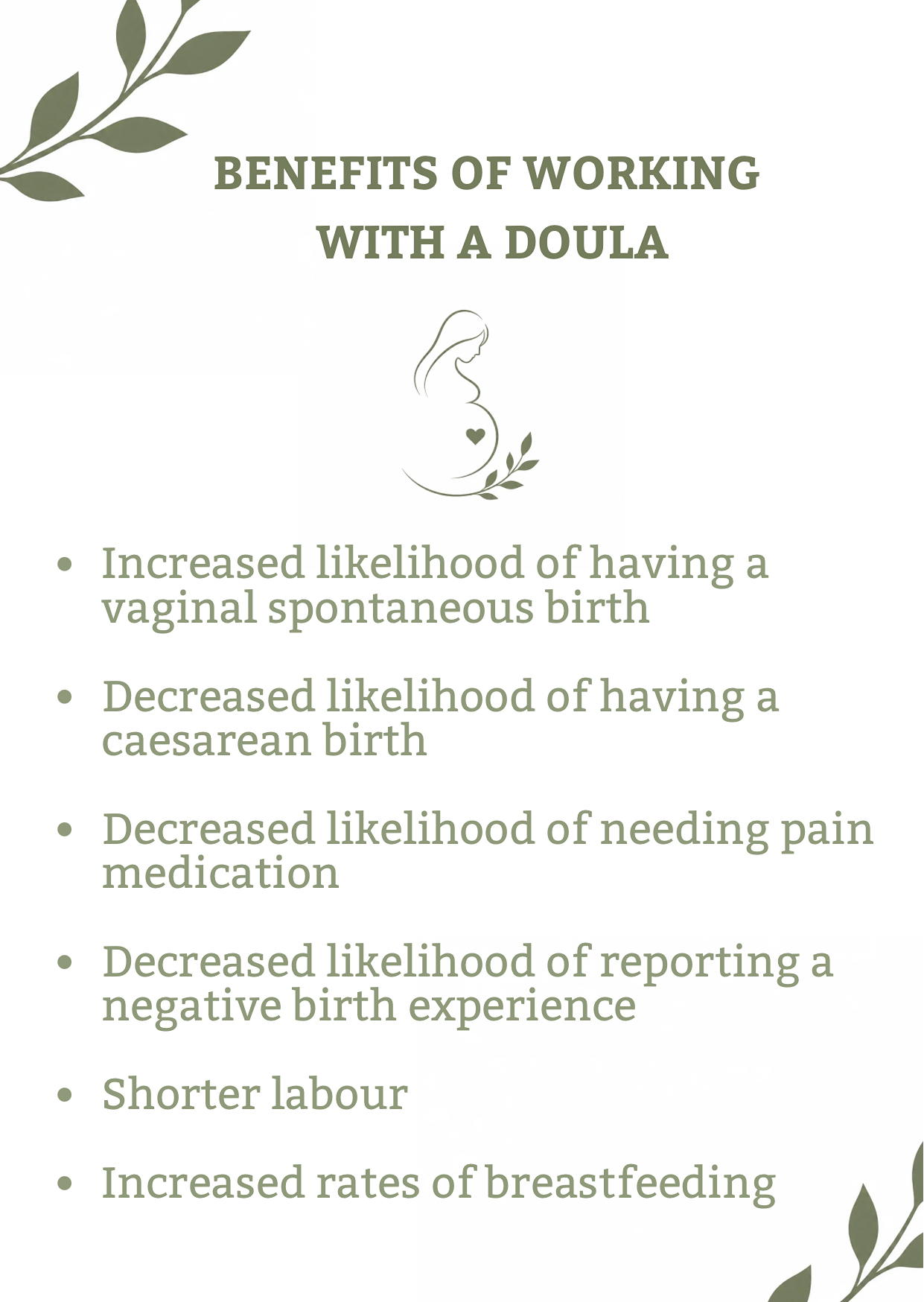
What are the benefits of a doula?
Key benefits include shorter labours, fewer complications, reduced requests for pain relief/epidurals, lower C-section and assisted delivery rates, and increased breastfeeding success.
“Speak tenderly to them. Let there be kindness in your face, in your eyes, in your smile, in the warmth of your greeting. Always have a cheerful smile. Don't only give your care, but give your heart as well.” - Mother Teresa
What does a doula do?
During pregnancy
Birth Planning & Education: Helping you explore options and create a birth plan or preferences list.
Emotional & Physical Preparation: Providing reassurance, discussing fears, and teaching comfort techniques such as breathing and massage.
Ongoing Support & Information: Offering prenatal check-ins, resources, and evidence-based information to support informed decision-making.
Partner Support: Guiding partners in how to support the labouring person throughout pregnancy and birth.
During labour & birth
Physical Comfort & Positioning: Using massage, breathing techniques, movement, and labour positions to support comfort and encourage labour progress.
Emotional Support: Offering reassurance, encouragement, and a calming presence throughout labour and birth.
Advocacy & Communication: Supporting informed, evidence-based decision-making and helping you communicate with medical staff.
Partner Support: Guiding partners in providing comfort and support while ensuring continuous care is maintained.
Calm Birth Environment: Helping create a peaceful birthing space through lighting, music, and atmosphere.
After birth (postnatal)
Infant Feeding & Newborn Care: Supporting feeding choices, breastfeeding support and teaching practical newborn care techniques.
Rest & Recovery: Allowing parents to sleep or shower by caring for the baby and providing nourishing food.
Practical Household Help: Managing light housekeeping, laundry and running errands.
Family Support: Providing reassurance, supporting partners and siblings.
Signposting: Connecting parents to professional resources and services.